The Atmel AT80C31X2-RLTUL is a high-performance 8-bit microcontroller derived from the classic Intel 8051 architecture, implemented in an enhanced CMOS process and optimized for higher execution throughput and expanded memory addressing compared to baseline 80C31 devices. It is designed for embedded control applications requiring deterministic execution, robust I/O control, and compatibility with legacy 8051 software ecosystems while providing improved instruction cycle efficiency through a dual data pointer architecture.
## Device Function and Architectural Positioning
The AT80C31X2-RLTUL is an 8051-compatible microcontroller core device belonging to Atmel’s X2-enhanced 8051 family. It implements a fully compatible 8-bit CPU architecture with additional performance enhancements that reduce the number of clock cycles per instruction compared to standard 8051 implementations.
The device operates as a general-purpose embedded controller, integrating CPU execution logic, program memory interface capability, data memory (internal RAM), and a set of digital I/O peripherals. It is designed for deterministic real-time control tasks, including industrial automation, instrumentation, and embedded control systems.
The “X2” architecture enhancement is a key feature of the device, allowing reduced machine cycle count per instruction, effectively increasing throughput without fundamentally changing the instruction set architecture.
## Device Identification and Package Characteristics
The part number AT80C31X2-RLTUL identifies a specific configuration within the Atmel 80C31X2 microcontroller family.
The “AT80C31X2” denotes an enhanced 8051-compatible microcontroller core with X2 performance mode capability. The “80C31” base indicates a ROM-less variant of the 8051 family, meaning that the device does not include on-chip program ROM and requires external program memory for code execution.
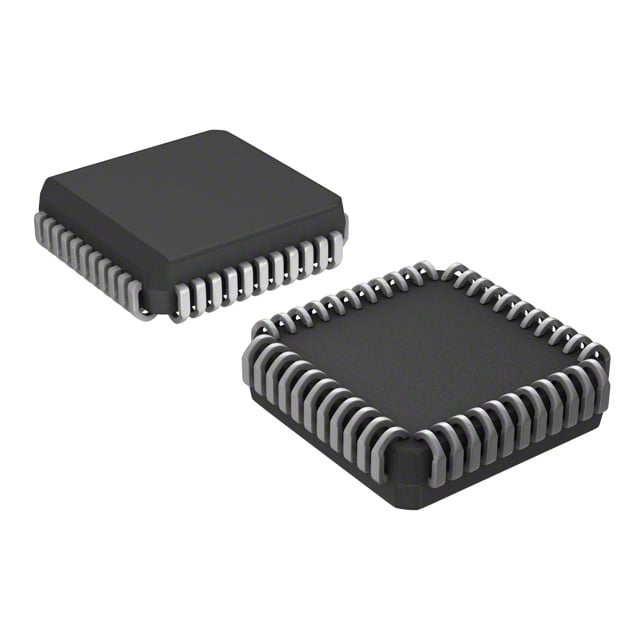
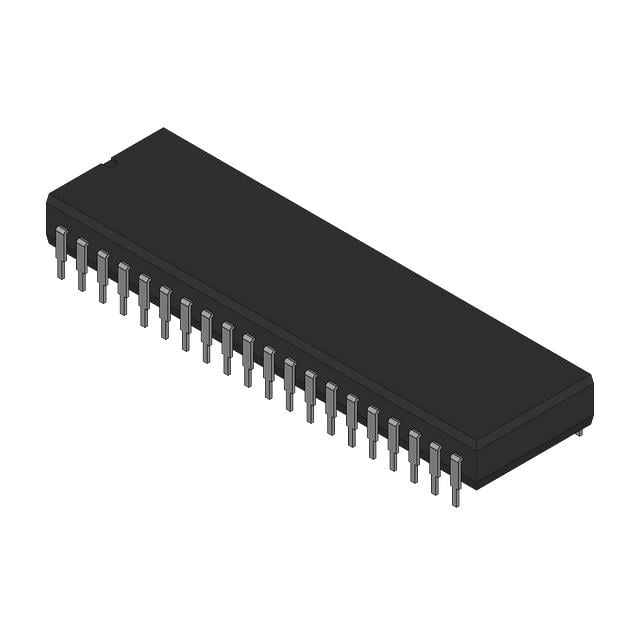
The suffix “RLTUL” refers to package type and ordering configuration, typically indicating a lead-free, tape-and-reel or bulk shipment variant in a surface-mount or through-hole package format depending on manufacturing definition. The exact mechanical form factor is determined by the RL package code within Atmel’s ordering system.
## CPU Core Architecture and Execution Model
The AT80C31X2 implements a Harvard architecture 8-bit CPU core with separate program and data memory spaces. The instruction set is fully compatible with the standard 8051 architecture, including accumulator-based arithmetic, bit-addressable operations, and register bank switching.
The X2 mode feature is a significant architectural enhancement that effectively reduces the number of clock cycles required per machine cycle. In traditional 8051 architecture, most instructions require multiple oscillator cycles; in X2 mode, this relationship is optimized to improve throughput without altering instruction semantics.
The CPU includes an arithmetic logic unit (ALU), program counter, accumulator, program status word, and multiple register banks, enabling efficient context switching in interrupt-driven applications.
## Memory Architecture and External Interface
The AT80C31X2 is a ROM-less microcontroller, meaning it does not contain internal program memory. Instead, it relies on external program memory connected via the external memory interface.
The external memory interface includes address and data bus multiplexing typical of 8051 architecture, allowing connection to external EPROM, Flash, or SRAM devices for program storage.
Internal data memory includes a limited amount of RAM used for register banks, stack operations, and general-purpose data storage. The architecture supports bit-addressable memory regions for efficient bit-level manipulation.
The external memory interface also supports data memory expansion, allowing the microcontroller to access external RAM as data storage if required by the application.
## Clock System and Performance Characteristics
The device operates using an external clock source, typically a crystal oscillator or external clock generator. The system clock is used to derive machine cycles and instruction execution timing.
In X2 mode, the effective instruction throughput is increased by reducing the number of oscillator cycles per machine cycle, improving performance without increasing external clock frequency.
Clock stability directly influences instruction timing accuracy and peripheral operation consistency, making external oscillator design critical in system implementation.
## Digital I/O and Peripheral Structure
The AT80C31X2 includes multiple bidirectional digital I/O ports typical of 8051 architecture. These ports can be configured as input or output lines and are often used for interfacing with external peripherals, sensors, and control signals.
Each port pin includes internal latch structures and output drivers capable of sourcing or sinking limited current, depending on configuration and electrical characteristics.
The device does not inherently include advanced integrated analog peripherals, as its design is focused on digital control and external peripheral interfacing.
## Interrupt System Architecture
The microcontroller includes a structured interrupt system consistent with 8051 family architecture. Interrupts are prioritized and vectored, allowing deterministic response to external and internal events.
Interrupt sources typically include external interrupt pins, timer/counter overflow events, and serial communication events if integrated serial peripherals are present in the configuration.
The interrupt system supports nested interrupt handling through priority configuration, enabling real-time responsiveness in control applications.
## Power Supply and Electrical Operation
The AT80C31X2 operates from a standard single-supply voltage appropriate for CMOS 8051-class microcontrollers. Power consumption is dependent on clock frequency and operating mode.
Dynamic power consumption is primarily determined by switching activity in the CPU core and I/O ports. Idle and power-down modes may be available depending on specific device configuration within the family, reducing power consumption when full CPU operation is not required.
Proper decoupling of the supply pins is required to ensure stable operation during high-speed switching of external memory buses and I/O transitions.
## System-Level Application Context
The AT80C31X2-RLTUL is used in embedded control systems requiring external program memory flexibility and deterministic 8-bit processing. Typical applications include industrial controllers, legacy system upgrades, embedded instrumentation, and custom logic control systems.
It is particularly suited for designs requiring compatibility with existing 8051 software ecosystems while benefiting from improved execution performance through X2 mode operation.
The ROM-less architecture allows system designers to select external memory devices based on application requirements, enabling flexible code size scaling.
## Conclusion
The Atmel AT80C31X2-RLTUL is an enhanced 8051-compatible 8-bit microcontroller featuring X2 execution mode, external program memory architecture, and deterministic interrupt-driven control capability. Designed for embedded control applications requiring flexible memory configuration and improved instruction throughput, it maintains full compatibility with the 8051 instruction set while delivering higher performance through architectural optimization.