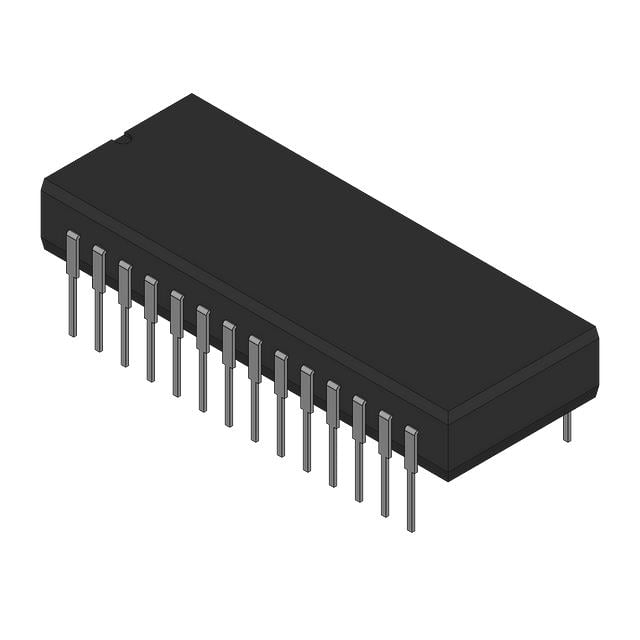
Q1: What is the Maxim Integrated DS1616?
A1: The Maxim Integrated DS1616 is a real-time clock (RTC) with an integrated 32.768 kHz crystal. It is designed to provide accurate timekeeping in various electronic applications.
Q2: What is the power supply voltage range for the Maxim Integrated DS1616?
A2: The Maxim Integrated DS1616 operates with a power supply voltage range of 2.0V to 5.5V, making it suitable for a variety of voltage systems.
Q3: Does the Maxim Integrated DS1616 have a backup power option?
A3: Yes, the Maxim Integrated DS1616 has a battery backup feature that ensures continued timekeeping even when the main power supply is disconnected.
Q4: What is the accuracy of the Maxim Integrated DS1616?
A4: The Maxim Integrated DS1616 provides excellent timekeeping accuracy, with a time error of less than ±5 minutes per year under typical operating conditions.
Q5: What type of output does the Maxim Integrated DS1616 provide?
A5: The Maxim Integrated DS1616 outputs a square wave signal with selectable frequencies, including 32.768 kHz, 1 Hz, and 4096 Hz.
Q6: Can the Maxim Integrated DS1616 be used for industrial applications?
A6: Yes, the Maxim Integrated DS1616 is suitable for industrial applications requiring precise and reliable timekeeping, such as data loggers, automation systems, and other embedded systems.
Q7: How does the Maxim Integrated DS1616 keep time during power failures?
A7: The Maxim Integrated DS1616 has a built-in battery input, which allows it to continue timekeeping even during power outages by drawing power from an external backup battery.
Q8: Is the Maxim Integrated DS1616 temperature-compensated?
A8: Yes, the Maxim Integrated DS1616 is temperature-compensated, which helps ensure accurate timekeeping across a wide range of operating temperatures.
Q9: What is the operating temperature range of the Maxim Integrated DS1616?
A9: The Maxim Integrated DS1616 operates within a temperature range of -40°C to +85°C, making it suitable for a wide variety of environmental conditions.
Q10: What is the package type for the Maxim Integrated DS1616?
A10: The Maxim Integrated DS1616 is available in a small 8-pin SOIC package, which allows for easy integration into compact designs.
Q11: Does the Maxim Integrated DS1616 have a programmable alarm feature?
A11: Yes, the Maxim Integrated DS1616 includes a programmable alarm function that can trigger events based on the real-time clock.
Q12: How is the time set on the Maxim Integrated DS1616?
A12: The Maxim Integrated DS1616 is set via an I2C interface, allowing for easy communication with microcontrollers or other digital systems.
Q13: What communication interface does the Maxim Integrated DS1616 use?
A13: The Maxim Integrated DS1616 uses the I2C communication protocol, which simplifies the process of integrating it with a variety of microcontrollers and systems.
Q14: Can the Maxim Integrated DS1616 be used for time-stamping data?
A14: Yes, the Maxim Integrated DS1616 is ideal for applications that require accurate time-stamping, such as data logging and event recording.
Q15: What is the maximum clock frequency for the Maxim Integrated DS1616?
A15: The Maxim Integrated DS1616 can output a 32.768 kHz clock signal, which is commonly used in RTC applications.
Q16: Does the Maxim Integrated DS1616 include a watchdog timer?
A16: No, the Maxim Integrated DS1616 does not include a watchdog timer. However, it is equipped with a precise RTC and battery backup features.
Q17: Can the Maxim Integrated DS1616 be used in portable devices?
A17: Yes, the Maxim Integrated DS1616 is suitable for portable devices due to its low power consumption and battery backup functionality, ensuring continuous timekeeping.
Q18: How does the Maxim Integrated DS1616 compare to other RTC modules?
A18: The Maxim Integrated DS1616 stands out due to its compact size, low power consumption, high accuracy, and battery backup feature, making it a reliable choice for a variety of applications.
Q19: Is there a software library available for the Maxim Integrated DS1616?
A19: Yes, Maxim Integrated provides software libraries and application notes for the DS1616, making it easier for engineers to implement the device in their designs.
Q20: What applications are best suited for the Maxim Integrated DS1616?
A20: The Maxim Integrated DS1616 is ideal for applications such as time-sensitive data logging, industrial automation, consumer electronics, and any system requiring reliable real-time clock functionality.