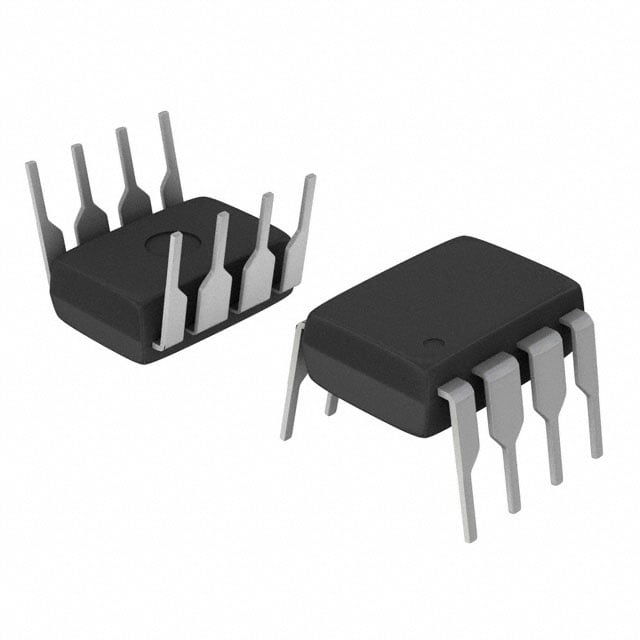
Q1: What is the Maxim Integrated DS1314?
A1: The Maxim Integrated DS1314 is a high-performance, low-power, real-time clock (RTC) designed for use in embedded systems and various applications requiring accurate timekeeping.
Q2: What is the primary function of the DS1314?
A2: The primary function of the DS1314 is to provide accurate real-time clock functionality, including timekeeping and calendar functions for electronic systems.
Q3: What is the supply voltage range for the Maxim Integrated DS1314?
A3: The DS1314 operates with a supply voltage range of 2.97V to 3.63V, making it compatible with most standard logic levels used in embedded systems.
Q4: How accurate is the DS1314 in terms of timekeeping?
A4: The DS1314 offers a typical timekeeping accuracy of ±5 minutes per year, providing highly reliable and precise time measurements.
Q5: Does the DS1314 have a backup battery?
A5: Yes, the DS1314 features a battery backup function, allowing it to continue keeping time even during power outages by using an external battery (typically a coin-cell battery).
Q6: What is the maximum time for battery backup in the DS1314?
A6: The DS1314 can maintain accurate time for up to 5 years with a typical backup battery, depending on the type and capacity of the battery used.
Q7: Does the DS1314 support an external oscillator?
A7: Yes, the DS1314 can be connected to an external oscillator for improved time accuracy or for use in systems with specific frequency requirements.
Q8: What kind of interface does the DS1314 use to communicate with a microcontroller?
A8: The DS1314 uses the I²C (Inter-Integrated Circuit) interface to communicate with a microcontroller or other devices, allowing for easy integration into various systems.
Q9: What is the maximum clock frequency for the DS1314?
A9: The maximum clock frequency for the DS1314 is 400kHz on the I²C bus, which is sufficient for most timekeeping and data transmission tasks.
Q10: Is the DS1314 suitable for use in battery-operated devices?
A10: Yes, the DS1314 is highly suitable for battery-operated devices due to its low power consumption, making it ideal for portable or remote systems that need to conserve energy.
Q11: What kind of time formats does the DS1314 support?
A11: The DS1314 supports both 12-hour and 24-hour time formats, providing flexibility for different system requirements.
Q12: Can the DS1314 be used to generate periodic interrupts?
A12: Yes, the DS1314 has an interrupt output that can be used to generate periodic interrupts for timing-related events, such as triggering alarms or scheduled tasks.
Q13: What is the typical current consumption of the DS1314?
A13: The DS1314 typically consumes 1.2µA in battery backup mode and 50µA in normal operation, making it energy-efficient for low-power systems.
Q14: Does the DS1314 provide a calendar function?
A14: Yes, the DS1314 includes calendar functions, allowing it to keep track of the date, day of the week, and year in addition to the time.
Q15: How does the DS1314 handle leap years?
A15: The DS1314 includes leap-year correction for accurate tracking of calendar years, ensuring that February 29th is properly accounted for in leap years.
Q16: Can the DS1314 synchronize to an external clock source?
A16: Yes, the DS1314 can synchronize to an external clock source, such as a GPS or network time server, for applications requiring highly accurate and synchronized timekeeping.
Q17: Is the DS1314 suitable for use in industrial applications?
A17: Yes, the DS1314 is well-suited for industrial applications, offering robust timekeeping capabilities for control systems, automation, and monitoring equipment.
Q18: What is the temperature range for the DS1314?
A18: The DS1314 operates over a temperature range of -40°C to +85°C, making it suitable for a wide range of environments, including harsh industrial settings.
Q19: Does the DS1314 support alarms or time-related events?
A19: Yes, the DS1314 has an alarm function that can be programmed to trigger at specific times, useful for applications like scheduling or event-driven systems.
Q20: What is the typical package for the Maxim Integrated DS1314?
A20: The DS1314 is typically available in an 8-pin SOIC or an 8-pin DIP package, offering flexibility for different design and assembly requirements.