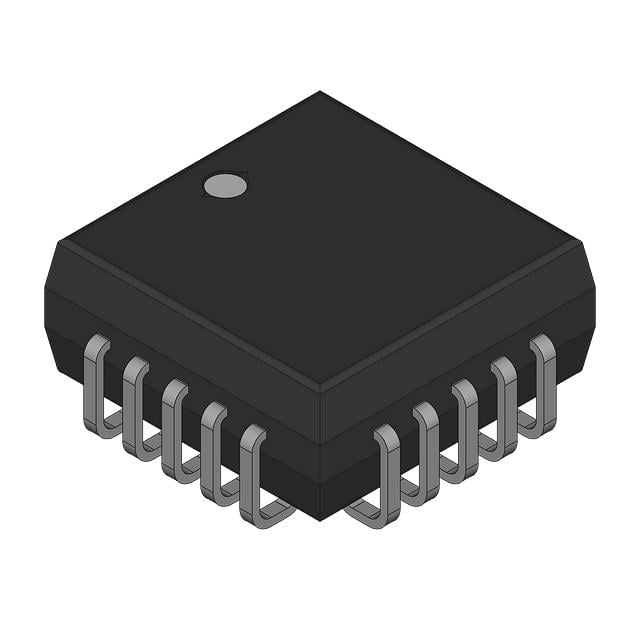
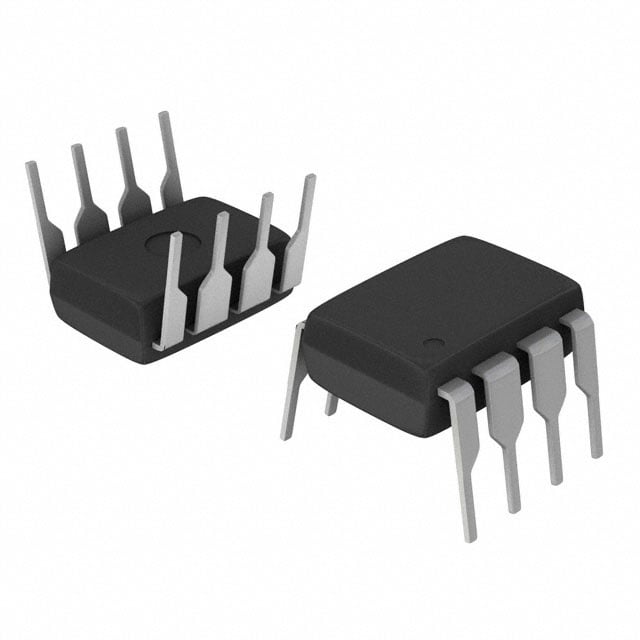
The Intel EPCS16SI8N is a serial configuration device specifically designed to store configuration data for Intel (formerly Altera) FPGAs, particularly those in the Cyclone®, Stratix®, and MAX® II families. The EPCS (Erasable Programmable Configuration Serial) series provides a cost-effective, non-volatile memory solution that supports in-system programming via the Serial Peripheral Interface (SPI). The EPCS16SI8N offers a storage capacity of 16 megabits (2 megabytes), making it well-suited for medium-complexity FPGA designs requiring moderate configuration file sizes.
This device plays a critical role in FPGA-based systems by providing the initial bitstream needed to configure the FPGA upon power-up. The EPCS16SI8N is reprogrammable and supports both page and sector erase functions, offering flexibility for development and deployment environments where the configuration data may change over time. Its small footprint, low pin count (8-lead SOIC), and compatibility with standard SPI protocols make it highly integrable into compact PCB designs.
## Key Features
* Memory Capacity: 16 Mb (2 MB) of flash memory
* Interface Type: SPI (Serial Peripheral Interface)
* Operating Voltage Range: 2.7V to 3.6V
* Operating Frequency: Up to 40 MHz clock rate
* Package Type: 8-lead SOIC (Small Outline Integrated Circuit)
* Endurance: 100,000 program/erase cycles per sector
* Data Retention: Minimum 20 years
* Operating Temperature Range: -40°C to +85°C (industrial grade)
* In-System Programmable (ISP): Yes, via FPGA JTAG interface
* Status Register and Readback Capabilities
* Supports Serial Configuration for Intel FPGAs
* Page size: 256 bytes per page
* Sector Size: 64 KB per sector
## Functional Overview
The EPCS16SI8N is primarily intended for FPGA configuration and is optimized for sequential data transfer. When used in an FPGA system, the FPGA acts as an SPI master and reads the configuration bitstream from the EPCS device at power-on or reconfiguration. This allows the FPGA to be dynamically programmed without the need for parallel PROMs or external controllers.
The device contains 2 megabytes of flash memory divided into pages and sectors. This architecture supports partial or full device reprogramming, with erase granularity at the sector level and programming performed at the page level. The flash organization enables efficient use of memory, particularly for designs that support multiple configuration images or require in-field updates.
## Electrical Characteristics
* Vcc Supply Voltage: 2.7V – 3.6V
* Input Voltage (Vin): -0.5V to Vcc + 0.3V
* Output Voltage (Vout): -0.5V to Vcc + 0.3V
* Power Dissipation: Low power standby and active current modes
* Standby Current: < 50 µA (typical)
* Active Read Current: < 8 mA at 40 MHz
## Timing and Performance
* SPI Clock Frequency: Maximum 40 MHz
* Read Access Time: Fast random and sequential read capability
* Page Program Time: < 1 ms per page
* Sector Erase Time: < 1 second per 64 KB sector
The SPI interface supports four primary instructions: Read, Write (Program), Erase, and Status Register Access. These instructions allow for full device control, including enabling/disabling write access, checking busy status, and managing write protection.
## SPI Protocol Compatibility
The EPCS16SI8N supports a standard SPI protocol, compatible with mode 0 (CPOL = 0, CPHA = 0) and mode 3 (CPOL = 1, CPHA = 1), allowing easy integration with standard SPI controllers and microcontrollers during testing or system bring-up. In FPGA systems, Intel Quartus software provides tools for programming and managing EPCS devices over the JTAG interface using in-system programming (ISP).
## Application Use Case
* FPGA Configuration Memory: The primary application of the EPCS16SI8N is storing FPGA configuration files (.pof or .jic formats) for Intel FPGAs. It enables FPGAs to self-configure at power-on by loading the configuration bitstream from the EPCS memory over the serial interface.
* Field Firmware Updates: The EPCS device can be updated in the field via the JTAG interface or a host controller, making it ideal for systems requiring remote or field upgrades.
* Embedded Systems: Useful in embedded applications where the system needs to boot an FPGA before activating higher-level processing.
* Multiboot Systems: Designers can use multiple configuration images stored in different sectors to support alternate boot configurations (e.g., factory vs. user firmware).
## Advantages
* Compact Form Factor: With its 8-lead SOIC package, the EPCS16SI8N offers a minimal PCB footprint, ideal for space-sensitive applications.
* Low Pin Count Interface: Only four SPI signals are required (MOSI, MISO, SCLK, CS#), which simplifies routing and board layout.
* Non-Volatile Storage: Maintains data integrity for over 20 years without power.
* ISP Support: Direct programming via JTAG, supported by Intel Quartus Programmer and USB-Blaster tools.
* Reliable: High endurance and long retention make it suitable for mission-critical and long-life-cycle products.
## Package Details
* Package: SOIC-8
* Dimensions: Approx. 5.0 mm × 6.2 mm
* RoHS Compliant: Yes
* Lead Finish: 100% matte tin
## Summary of Specifications
| Parameter | Specification |
| --------------------- | ------------------------------------- |
| Memory Size | 16 Mbit (2 MB) |
| Interface Type | SPI (Mode 0 and Mode 3 compatible) |
| Clock Frequency | Up to 40 MHz |
| Package Type | SOIC-8 |
| Supply Voltage | 2.7V to 3.6V |
| Endurance | 100,000 write/erase cycles per sector |
| Data Retention | Minimum 20 years |
| Operating Temperature | -40°C to +85°C |
| Erase Granularity | Sector (64 KB) |
| Program Granularity | Page (256 bytes) |
| ISP Support | Yes, via JTAG |
| Compatible With | Intel Cyclone, MAX II, Stratix FPGAs |
## Conclusion
The Intel EPCS16SI8N is a robust and efficient SPI-based configuration memory that provides reliable non-volatile storage for Intel FPGAs. It offers a balanced combination of speed, size, and endurance, making it ideal for storing FPGA configuration bitstreams in industrial, embedded, and consumer electronics applications. Its compatibility with standard SPI protocols, in-system programming capability, and long data retention time ensure flexible design integration and long-term reliability. Whether in production systems or development boards, the EPCS16SI8N continues to be a trusted component in FPGA-based designs.