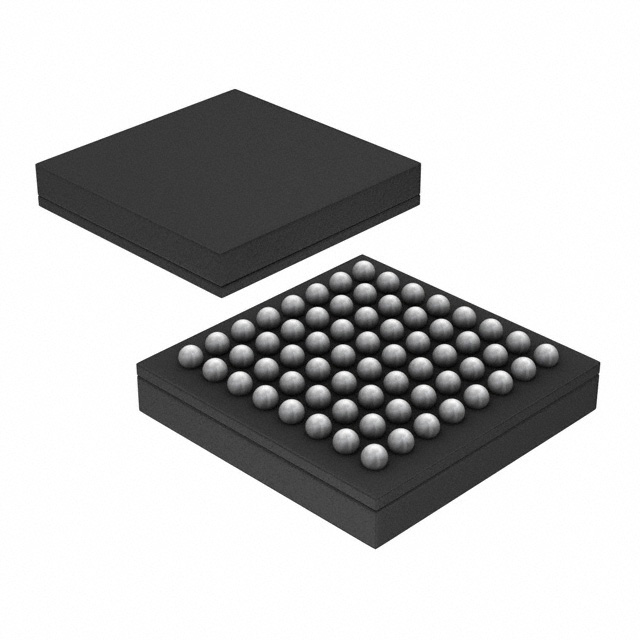
The 5M40ZE64I5N is a versatile FPGA (Field-Programmable Gate Array) developed by Intel (formerly Altera). It belongs to the MAX 10 family, which is known for offering a combination of logic density, I/O flexibility, and built-in features that cater to a wide range of applications. Here’s an in-depth look at its features, capabilities, and applications:
## Overview
The MAX 10 series FPGAs are designed to provide a cost-effective solution with a variety of built-in functionalities, making them suitable for applications that require moderate logic density and a high degree of flexibility. The 5M40ZE64I5N is part of this family, offering a blend of performance, power efficiency, and ease of use.
## Key Features
1. Logic Density and Architecture:
- Logic Elements: The 5M40ZE64I5N integrates 40,000 logic elements (LEs). Each LE consists of a combination of logic gates, multiplexers, and flip-flops that can be configured to implement a wide variety of digital circuits.
- Look-Up Tables (LUTs): The FPGA utilizes LUTs for implementing combinational logic, providing flexibility in designing complex logic functions.
2. Memory:
- Embedded Memory Blocks: The FPGA includes embedded memory blocks that can be used for implementing memory functions such as SRAM (Static RAM) and FIFO (First-In-First-Out) buffers. This feature is essential for applications requiring fast and efficient data storage and retrieval.
- User-Defined Memory: Designers can configure the memory blocks to meet specific application needs, enhancing the FPGA%27s adaptability to various tasks.
3. I/O Capabilities:
- I/O Pins: The 5M40ZE64I5N provides a range of I/O pins that support various voltage standards, enabling compatibility with a wide array of external devices and interfaces.
- High-Speed I/O: It includes high-speed I/O capabilities, allowing for efficient data transfer and communication with other system components.
4. Built-In Features:
- Phase-Locked Loop (PLL): The FPGA features integrated PLLs, which are used for clock management and signal conditioning. PLLs help in generating stable clock signals and reducing clock jitter, which is crucial for high-speed digital designs.
- Embedded Multipliers: The device includes embedded multipliers that facilitate efficient implementation of arithmetic operations, such as multiplication and accumulation, which are common in digital signal processing applications.
5. Configuration and Development:
- Configuration Options: The 5M40ZE64I5N supports various configuration methods, including passive serial, active serial, and parallel configuration. This flexibility allows for easy integration into different system designs.
- Development Tools: Intel provides development tools such as the Quartus Prime software suite, which offers a comprehensive environment for designing, simulating, and programming FPGA-based systems. These tools include features for logic synthesis, timing analysis, and hardware debugging.
6. Power Management:
- Low Power Consumption: The MAX 10 FPGAs are designed with power efficiency in mind, offering low power consumption characteristics that make them suitable for battery-operated and energy-conscious applications.
- Power Supply: The 5M40ZE64I5N operates with a single 3.3V power supply, simplifying the power supply design and reducing the overall system complexity.
7. Package and Form Factor:
- Package Type: The FPGA is available in a 64-pin TQFP (Thin Quad Flat Package), which provides a compact and easy-to-mount package suitable for various PCB designs.
- Size and Pinout: The TQFP package offers a balance between pin count and package size, making it suitable for both space-constrained and larger designs.
## Applications
1. Communications:
- The 5M40ZE64I5N is used in communication systems where flexibility and high-speed I/O are essential. It can be employed in applications such as network routers, modems, and base stations, where rapid data processing and transfer are required.
2. Industrial Automation:
- In industrial automation, the FPGA can be utilized for control systems, data acquisition, and real-time processing tasks. Its embedded memory and high-speed I/O capabilities make it suitable for managing complex industrial processes.
3. Consumer Electronics:
- The FPGA’s versatility allows it to be used in consumer electronics, including multimedia devices, gaming systems, and home appliances. Its ability to handle various interfaces and processing tasks makes it a good fit for these applications.
4. Automotive:
- The 5M40ZE64I5N can be used in automotive systems such as infotainment units, advanced driver assistance systems (ADAS), and electronic control units (ECUs). Its robust performance and reliability are crucial for meeting automotive standards and requirements.
5. Medical Devices:
- In medical devices, the FPGA can be used for processing sensor data, implementing signal processing algorithms, and managing communication interfaces. Its power efficiency and integrated features contribute to the design of reliable and compact medical solutions.
## Conclusion
The 5M40ZE64I5N FPGA from Intel%27s MAX 10 series offers a well-rounded solution for various applications requiring moderate logic density and flexible functionality. With its rich set of features, including embedded memory, high-speed I/O, and power efficiency, it provides designers with a versatile platform for developing and implementing a wide range of digital systems. Whether for industrial automation, consumer electronics, or automotive applications, the 5M40ZE64I5N is designed to meet the diverse needs of modern electronic design.