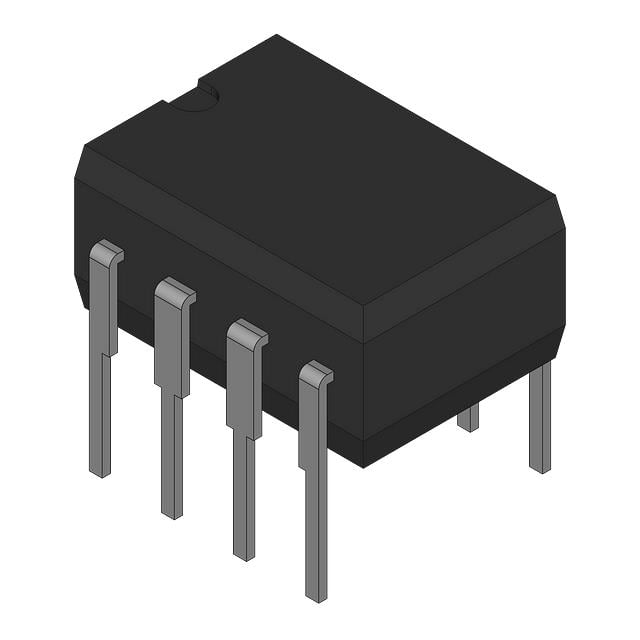
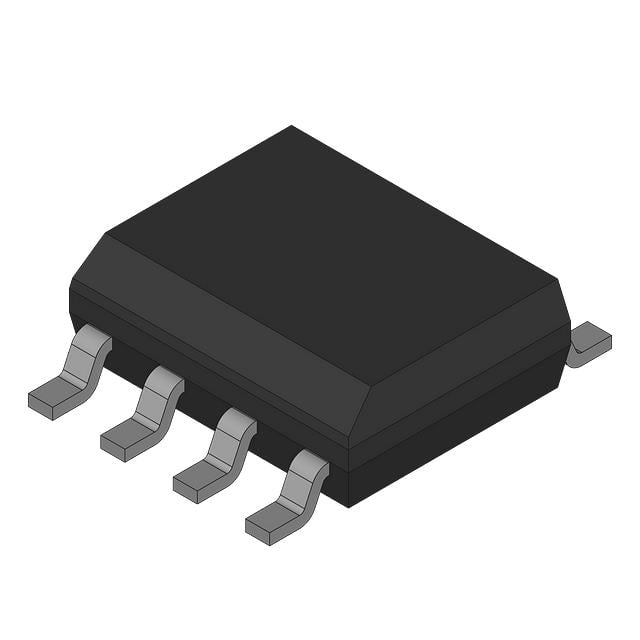
Analog Devices ADP5070AREZ is a dual-output switching regulator controller designed to generate both positive and negative regulated supplies from a single input voltage source. It integrates two high-frequency DC-DC converter channels within a single monolithic control IC, enabling compact power supply designs for analog, RF, and mixed-signal systems that require symmetric or multi-rail biasing. The device is commonly used where low-noise bipolar supplies are required from a single input rail.
## Device Function and System-Level Positioning
The ADP5070 belongs to the class of dual switching regulator controllers with integrated pulse-width modulation (PWM) control. It is architected to support both a step-up (boost) converter and an inverting or negative-output converter topology. This dual-channel configuration allows simultaneous generation of a positive regulated output and a negative regulated output, typically used for operational amplifier supplies, data acquisition front-ends, and precision analog circuitry.
The device operates as a controller rather than a fully integrated power stage, requiring external inductors, power switches, and rectification elements. This architecture enables scalable output power levels and flexibility in power stage optimization depending on efficiency, ripple, and load requirements.
## Control Architecture and Regulation Mechanism
The internal control structure is based on fixed-frequency PWM regulation with independent feedback loops for each channel. Each converter channel includes an error amplifier, voltage reference system, compensation network interface, and gate-drive control logic for external switching elements.
The regulation mechanism compares scaled output feedback voltages against an internal reference and adjusts duty cycle accordingly. This closed-loop control ensures stable output voltage regulation across load transients and input voltage variations.
Both channels operate with synchronized or internally coordinated switching behavior depending on configuration, which reduces beat-frequency noise and improves system-level EMI performance.
## Power Conversion Topology Behavior
The boost channel operates in a step-up configuration where energy is stored in an external inductor during the switch-on phase and transferred to the output during the switch-off phase through a rectifying element. The inverting channel operates in a similar energy transfer mechanism but produces a negative output rail referenced to system ground.
The controller is designed to support continuous conduction mode operation, ensuring stable regulation under medium to heavy load conditions. Light-load operation may transition into discontinuous behavior depending on external component selection and compensation design.
## Input Operating Conditions and Power Management
The device accepts a wide input supply range suitable for industrial and mixed-signal systems. Internal undervoltage lockout circuitry ensures proper startup sequencing by disabling switching activity until the input supply reaches a valid operating threshold.
Soft-start functionality is implemented to limit inrush current during startup, gradually increasing duty cycle to allow controlled charging of output capacitors. This prevents overshoot and reduces stress on external inductive components.
Shutdown control is provided through an enable interface, allowing complete disabling of both switching channels for power-saving operation.
## Feedback and Output Regulation Interface
Each channel includes a dedicated feedback input pin used to sense output voltage via external resistor dividers. The error amplifier processes this feedback signal and generates a control voltage that defines PWM duty cycle.
The feedback loop is compensated externally, allowing system designers to optimize transient response, stability margins, and noise performance based on application-specific requirements.
Accurate regulation depends on proper selection of compensation components and layout practices, particularly in high-frequency switching environments.
## Switching Performance and Frequency Characteristics
The device operates at a fixed switching frequency architecture designed to balance efficiency, output ripple, and external component size. Internal oscillator circuitry establishes the base switching frequency, which is then distributed to both converter channels.
Synchronization behavior between channels reduces inter-channel interference and helps control conducted and radiated emissions in sensitive analog systems.
## Protection and Reliability Functions
The regulator integrates multiple protection features, including:
* Undervoltage lockout to prevent operation under insufficient input conditions
* Current limiting behavior to protect external switching elements and inductors
* Thermal protection to reduce risk of junction overheating
* Soft-start control to minimize startup stress
These mechanisms ensure robust operation under fault conditions and variable load environments.
## Typical Application Domains
The ADP5070 is primarily used in systems requiring split-supply generation from a single input rail. Typical applications include precision analog front-end circuits, instrumentation amplifiers, ADC/DAC biasing networks, RF signal conditioning circuits, and industrial sensor systems requiring both positive and negative rails.
It is also used in portable and battery-powered systems where efficient generation of bipolar supplies is required without the complexity of multiple discrete converters.
## Conclusion
Analog Devices ADP5070AREZ is a dual-channel switching regulator controller implementing synchronized boost and inverting converter architectures. Its design provides flexible generation of positive and negative regulated outputs from a single input source, with external power components defining current capability and efficiency. Through fixed-frequency PWM control, soft-start sequencing, and integrated protection mechanisms, the device supports robust, low-noise power conversion for precision analog and mixed-signal applications requiring bipolar supply rails.