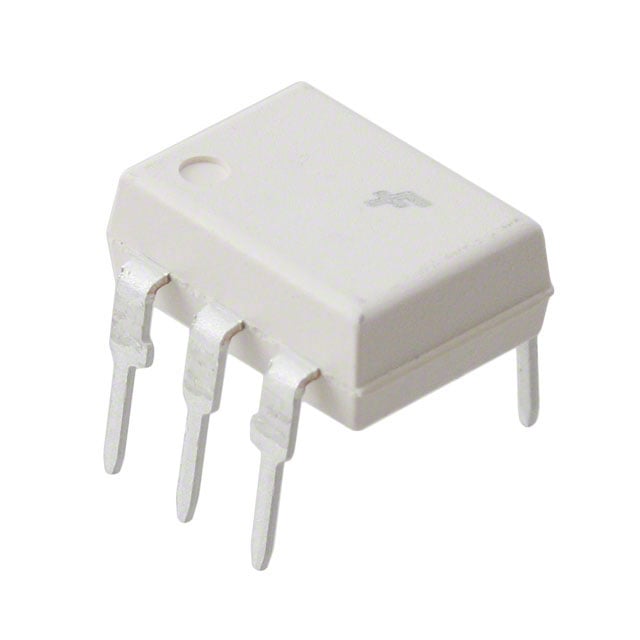
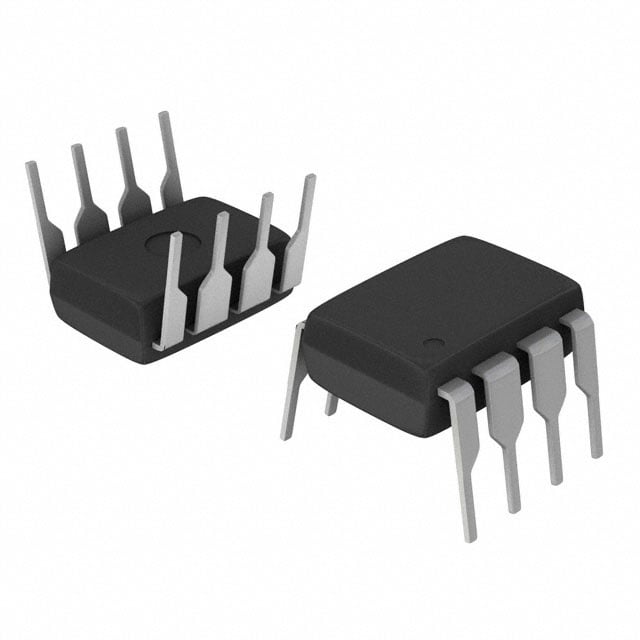
The onsemi MCT61 is a highly versatile and efficient optocoupler designed for applications that require electrical isolation and reliable performance. This device is particularly suitable for switching power supplies, motor control, and other applications where signal integrity and isolation are critical. Below is a detailed overview of the MCT61, including its specifications and features.
## Overview
The MCT61 is an optically isolated transistor designed to provide electrical isolation between the input (LED side) and output (phototransistor side). It operates by using an infrared LED to transmit signals to a phototransistor, which then converts the optical signal back into an electrical signal. This isolation protects sensitive components from high voltages and noise, making it ideal for a wide range of industrial and consumer applications.
## Key Specifications
1. Input Characteristics:
- LED Forward Voltage (Vf): Typically around 1.15V at a forward current (If) of 10 mA, with a maximum forward voltage rating of 1.5V.
- LED Forward Current (If): Recommended forward current range is between 5 mA and 20 mA for optimal performance.
- LED Reverse Voltage (Vr): Maximum reverse voltage is 5V.
2. Output Characteristics:
- Phototransistor Output: The output is a phototransistor that can operate in various configurations, such as common emitter or common collector.
- Collector-Emitter Voltage (Vce): Maximum collector-emitter voltage is 80V.
- Collector Current (Ic): Maximum output current is rated at 50 mA.
3. Isolation Voltage:
- Isolation Voltage (Viso): The MCT61 offers a high isolation voltage of 5000 VRMS, providing robust protection against voltage transients and ensuring reliable operation in high-voltage applications.
4. Switching Characteristics:
- Propagation Delay (tp): The typical propagation delay is around 10 µs, allowing for fast signal transmission and response.
- Rise Time (tr) and Fall Time (tf): Rise time is typically 10 µs, while fall time is around 5 µs, which makes it suitable for various digital applications.
5. Operating Temperature:
- Temperature Range: The operating temperature range is -40°C to +100°C, making it suitable for a wide range of environmental conditions.
6. Package Options:
- The MCT61 is available in various package types, including DIP-4 and SOP-4, allowing for flexible integration into different circuit designs.
## Applications
The MCT61 is versatile and can be used in numerous applications, including:
- Switching Power Supplies: Ideal for feedback and isolation in power supply circuits, providing safety and stability.
- Microcontroller Interfacing: Useful for interfacing microcontrollers with high-voltage systems, ensuring safe signal transfer.
- Motor Control Circuits: Employed in motor control applications to isolate and control signals between the control and power sections.
- Signal Isolation: Provides isolation in communication lines, ensuring reliable data transmission in noisy environments.
## Design Considerations
When designing with the MCT61, consider the following:
- Thermal Management: Ensure that the phototransistor operates within its specified temperature range to maintain performance and reliability.
- PCB Layout: A good layout is crucial for minimizing interference and ensuring signal integrity. Keep traces short and use proper grounding techniques.
- Drive Circuit Design: Properly design the input circuit to ensure that the LED is driven within the recommended current range to achieve the desired output performance.
## Conclusion
The onsemi MCT61 is a reliable and efficient optocoupler that provides essential electrical isolation for a variety of applications. With its robust specifications, high isolation voltage, and versatility, it is an excellent choice for engineers designing systems that require dependable signal isolation and integrity. Whether you are working on consumer electronics, industrial equipment, or power supplies, the MCT61 delivers the performance and reliability needed for modern electronic designs.