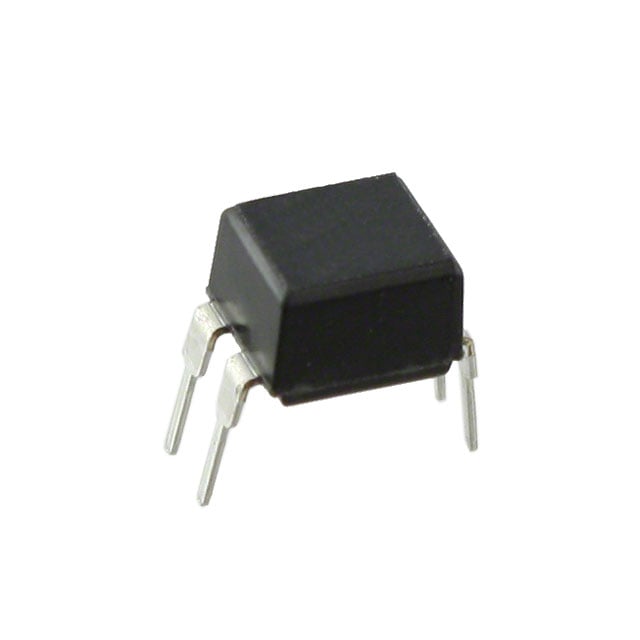
Here%27s a detailed introduction to the Renesas Electronics PS2802-4-F3-A, including its specifications:
---
## Renesas Electronics PS2802-4-F3-A: Detailed Introduction
## Overview
The Renesas PS2802-4-F3-A is a high-performance optocoupler, also known as an opto-isolator, designed to provide electrical isolation between circuits while transferring signals efficiently. This component is crucial in various applications, including signal transmission, electrical isolation, and circuit protection, making it suitable for use in communication systems, power supplies, and industrial controls.
## Key Specifications
1. General Description:
- Type: Optocoupler (Opto-isolator)
- Package Type: 4-pin Dual In-line Package (DIP)
- Mounting Type: Through-hole
- Case Material: Plastic (Epoxy resin)
- Lead Frame Material: Copper
2. Optocoupler Characteristics:
- Input LED:
- Forward Voltage (V_F): Typically 1.2V
- Forward Current (I_F): Maximum 20mA
- Reverse Voltage (V_R): Maximum 5V
- Wavelength (λ_peak): 950nm (Infrared)
- Output Phototransistor:
- Collector-Emitter Voltage (V_CEO): Maximum 50V
- Collector-Emitter Saturation Voltage (V_CE(sat)): Maximum 0.3V at I_C = 2mA
- Emitter-Collector Voltage (V_ECO): Maximum 5V
- Collector Current (I_C): Maximum 50mA
- Current Transfer Ratio (CTR): Typically 50% to 600% at I_F = 10mA, V_CE = 5V
3. Electrical Characteristics:
- Input:
- Forward Voltage (V_F): Minimum 1.1V, Maximum 1.4V
- Forward Current (I_F): Maximum 20mA
- Reverse Current (I_R): Maximum 10µA
- Output:
- Collector-Emitter Saturation Voltage (V_CE(sat)): Maximum 0.3V at I_C = 2mA
- Collector Current (I_C): Maximum 50mA
- Current Transfer Ratio (CTR): Minimum 50%, Maximum 600% at I_F = 10mA, V_CE = 5V
- Isolation Voltage:
- Isolation Voltage (V_iso): Minimum 5000Vrms
4. Switching Characteristics:
- Rise Time (t_r): Typically 30µs
- Fall Time (t_f): Typically 30µs
- Propagation Delay (t_p): Typically 60µs
- Propagation Delay (t_p) (High to Low): Typically 60µs
- Propagation Delay (t_p) (Low to High): Typically 60µs
5. Pin Configuration:
The PS2802-4-F3-A is housed in a 4-pin DIP package with the following pin configuration:
- Pin 1: Anode (LED Input)
- Pin 2: Cathode (LED Input)
- Pin 3: Collector (Phototransistor Output)
- Pin 4: Emitter (Phototransistor Output)
6. Features:
- Electrical Isolation: Provides effective isolation between input and output to protect sensitive circuits and ensure reliable operation.
- Wide CTR Range: Offers a broad current transfer ratio for flexibility in various applications.
- Fast Switching Times: Suitable for high-speed data transmission with minimal propagation delays.
- Compact Package: The 4-pin DIP package allows for easy integration into various PCB designs.
7. Applications:
- Digital Signal Isolation: Used in digital systems to isolate control signals from high-voltage or noisy environments.
- Power Supply Circuits: Ensures electrical isolation between the control and power stages of power supplies.
- Communication Systems: Provides isolation in data communication interfaces and transceivers.
- Industrial Controls: Ideal for isolating and conditioning signals in automation and control systems.
8. Environmental and Reliability:
- Operating Temperature Range: -40°C to +85°C
- Storage Temperature Range: -55°C to +150°C
- Relative Humidity: Maximum 85% RH (non-condensing)
- Soldering Temperature: Maximum 260°C for 10 seconds
## Conclusion
The Renesas PS2802-4-F3-A is a versatile optocoupler offering reliable electrical isolation and signal transmission for various applications. With its wide current transfer ratio, high isolation voltage, and fast switching characteristics, it is well-suited for use in digital systems, power supplies, communication interfaces, and industrial control applications. For precise design and application details, consulting the official datasheet from Renesas Electronics is recommended.
---
This comprehensive overview provides a deep dive into the PS2802-4-F3-A’s specifications, features, and typical applications, highlighting its importance in various electronic and electrical systems.