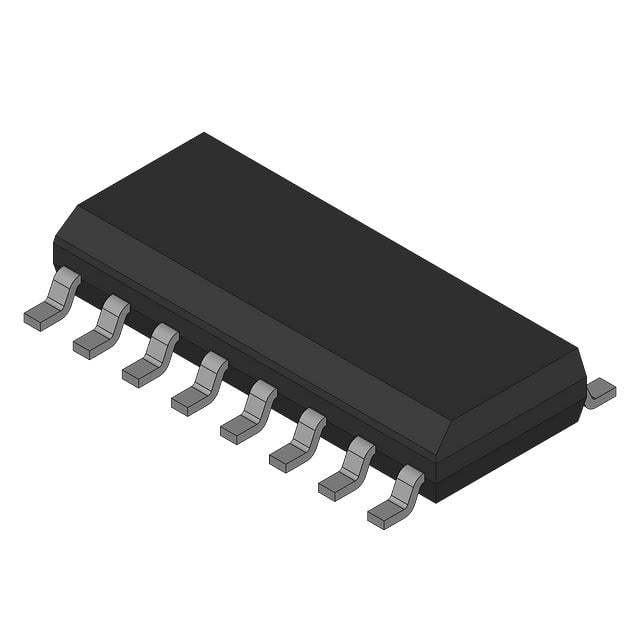
The Fairchild Semiconductor 74F138PC is a high-speed, low-power 3-to-8 line decoder/demultiplexer that is used in a variety of digital logic applications. This device belongs to the 74F series, known for its fast switching speeds and TTL compatibility. Below is a comprehensive overview of the 74F138PC, including its key features, specifications, and typical applications.
## Overview
The Fairchild Semiconductor 74F138PC is a 3-to-8 line decoder/demultiplexer with active-low outputs. It takes three binary inputs and decodes them into one of eight active-low output lines, effectively enabling the selection of one of eight data lines. The device is widely used in digital systems for data routing, address decoding, and memory selection applications due to its fast performance and reliable operation.
## Key Features
1. 3-to-8 Line Decoding: The 74F138PC has three input lines (A0, A1, A2) that are decoded into one of eight outputs (Y0 to Y7), providing a straightforward method for expanding address or data lines in digital systems.
2. Active-Low Outputs: All outputs are active-low, meaning the selected output line will be pulled low (logic 0) while all other outputs remain high (logic 1).
3. High Speed: The device is designed for fast operation with short propagation delays, making it suitable for high-speed digital circuits.
4. Low Power Consumption: The 74F138PC consumes less power compared to older TTL logic devices, contributing to overall system efficiency.
5. Wide Operating Voltage Range: It operates over a broad voltage range, allowing for flexibility in various circuit designs.
6. TTL-Compatible Inputs and Outputs: The device is designed to be compatible with TTL logic levels, ensuring it can interface with other TTL logic devices without level shifting.
7. Enable Inputs: Includes three enable inputs (G1, G2A, and G2B) which allow for selective decoding and control of the output lines.
8. Pin and Function Compatibility: The device is available in a 16-pin Dual In-Line Package (DIP) and Surface-Mount Package (SOP), providing options for different mounting and space requirements.
## Specifications
## General Specifications
- Package Type:
- Package: 16-pin DIP (Dual In-Line Package) or 16-pin SOP (Small Outline Package). The DIP package is ideal for through-hole mounting, while the SOP package suits surface-mount applications.
- Operating Voltage:
- Supply Voltage (VCC): 4.5V to 5.5V. This range allows for compatibility with standard TTL logic levels and flexibility in power supply design.
- Temperature Range:
- Operating Temperature Range: 0°C to +70°C. Suitable for commercial temperature ranges, making it appropriate for general consumer electronics.
## Electrical Characteristics
- Input Voltage Levels:
- High-Level Input Voltage (VIH): Minimum 2.0V.
- Low-Level Input Voltage (VIL): Maximum 0.8V.
- Output Voltage Levels:
- High-Level Output Voltage (VOH): Typically VCC - 0.2V at 4 mA load.
- Low-Level Output Voltage (VOL): Typically 0.2V at 4 mA load.
- Propagation Delay:
- Typical Propagation Delay (tPD): 3.5 ns. The time taken for a change in input to propagate to the output, indicating the speed of the device.
- Power Dissipation:
- Typical Power Dissipation (ICC): 10 mA. The typical current consumed by the device during operation, contributing to its low power consumption.
- Output Drive Capability:
- Fan-Out: Drives up to 10 TTL loads. Indicates the number of TTL inputs that the device can drive while maintaining proper signal levels.
## Enable Inputs
- Enable Inputs:
- G1: Active-high enable input that must be high for the decoder to operate.
- G2A and G2B: Active-low enable inputs that must be low for the decoder to operate. If either G2A or G2B is high, the outputs will not be selected.
## Applications
The 74F138PC is used in a variety of digital applications, including:
- Address Decoding: Expanding address lines in memory and peripheral selection circuits.
- Data Routing: Directing data to specific lines or devices in digital systems.
- Memory Expansion: Increasing the number of memory locations available by decoding additional address lines.
- Control Systems: Implementing control signals in complex digital systems and devices.
## Development Tools and Support
Fairchild Semiconductor provides various resources to support the 74F138PC, including:
- Datasheets: Comprehensive datasheets with detailed electrical characteristics, pin configuration, and application information.
- Application Notes: Documentation that offers practical insights into designing with the 74F138PC and integrating it into various circuits.
- Evaluation Boards: Boards that may be available for testing and developing circuits with the 74F138PC.
- Technical Support: Access to Fairchild’s technical support team for assistance with design challenges, application questions, and technical queries.
## Conclusion
The Fairchild Semiconductor 74F138PC is a high-speed, low-power 3-to-8 line decoder/demultiplexer that provides efficient and reliable decoding for digital applications. With its fast propagation delay, TTL-compatible inputs and outputs, and low power consumption, it is well-suited for use in high-speed and low-power digital systems. The device’s wide operating voltage range and various package options make it versatile for different design needs. Fairchild’s support resources further assist engineers in integrating and optimizing the 74F138PC for their specific applications.