Overview
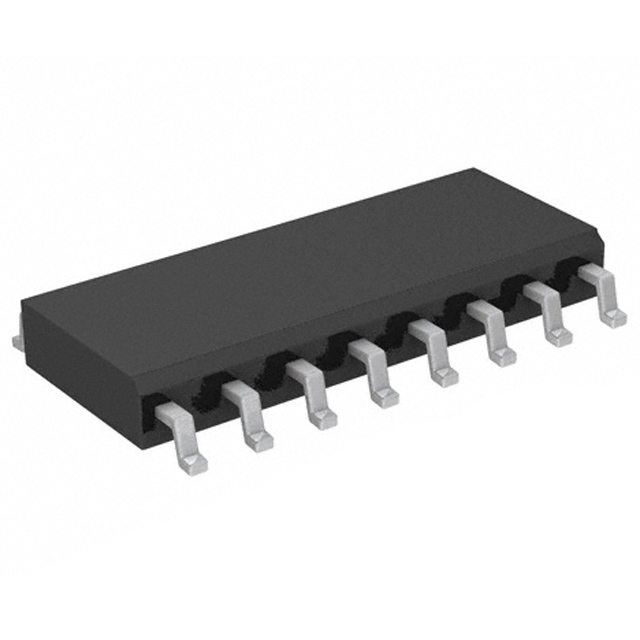
The NXP Semiconductors 74HCT221DB,112 is a dual monostable multivibrator, also known as a pulse generator. This component is designed to generate precise time delays, making it suitable for a wide range of timing and control applications. The device is a part of the 74HCT series, which uses High-Speed CMOS (HCT) logic technology, offering improved speed and low power consumption compared to traditional TTL logic.
Core Functionality
The 74HCT221 is typically used in applications where precise timing signals are required. It has two independent monostable multivibrator circuits, each capable of generating a pulse with a defined width based on external components (usually resistors and capacitors). Each multivibrator has an input (trigger), output (pulse), and control input for setting the pulse duration. The device is commonly used for time delay generation, signal shaping, and edge detection in digital systems.
Key Features
* Dual Monostable Multivibrator: The 74HCT221 includes two separate monostable multivibrator circuits, enabling two independent pulse timing operations from a single IC.
* High-Speed CMOS Technology: The use of HCT logic ensures that the device operates at high speeds while consuming low power, suitable for use in high-frequency digital systems.
* Voltage Range: The device operates within a voltage range of 4.5V to 5.5V, ensuring compatibility with standard logic systems, while offering high noise immunity.
* Low Power Consumption: The HCT technology provides low static power consumption, making the 74HCT221 ideal for battery-powered and energy-efficient systems.
* Triggering on Positive Edge: Each monostable multivibrator circuit is triggered by a positive edge on the input, producing a pulse on the output.
* Output Pulse Duration: The output pulse width is determined by an external resistor and capacitor connected to the device, providing a flexible timing configuration.
* Logic Level Compatibility: The 74HCT221 is compatible with TTL logic levels, ensuring that it can interface easily with other digital circuits.
Functional Blocks and Pin Configuration
The 74HCT221 consists of two independent monostable multivibrators. The device has a 14-pin dual in-line package (DIP) form factor, and each multivibrator includes the following pins:
* Trigger (T): This input pin is used to trigger the pulse generation when a positive-edge transition occurs.
* Reset (R): This input resets the multivibrator circuit, ensuring it can return to its stable state before the next trigger.
* Output (Q): The output pin provides the pulse generated by the multivibrator.
* Control (C): This input pin allows for pulse width control and can be used to modify the timing characteristics of the device.
Electrical Specifications
* Supply Voltage (Vcc): 4.5V to 5.5V, allowing for use in standard 5V digital logic systems.
* Input Voltage (Vi): The input voltage level ranges from 0V to Vcc, with a guaranteed logic high level of at least 2V and logic low level of 0V.
* Output Voltage (Vo): The output voltage ranges from 0V to Vcc, depending on the logic level of the output.
* Propagation Delay: The typical propagation delay time from input to output is approximately 20 ns, ensuring that the multivibrator can react quickly to changes in the trigger signal.
* Output Drive Current: The device can drive a maximum output current of 8 mA (sinking or sourcing), making it compatible with a wide range of logic circuits and directly driving low-power loads.
Timing Characteristics
* Pulse Width: The duration of the output pulse is determined by the external timing components (resistor and capacitor) connected to the device. The pulse width can be calculated using the following formula:
$T_{pulse} = 0.693 imes R imes C$
where R is the resistance in ohms and C is the capacitance in farads.
* Minimum Pulse Width: The minimum pulse width achievable with the device is typically 100 ns, depending on external components and operating conditions.
* Timing Accuracy: The accuracy of the pulse duration is highly dependent on the external components used, with a tolerance typically in the range of 5-10% based on component quality.
Package Information
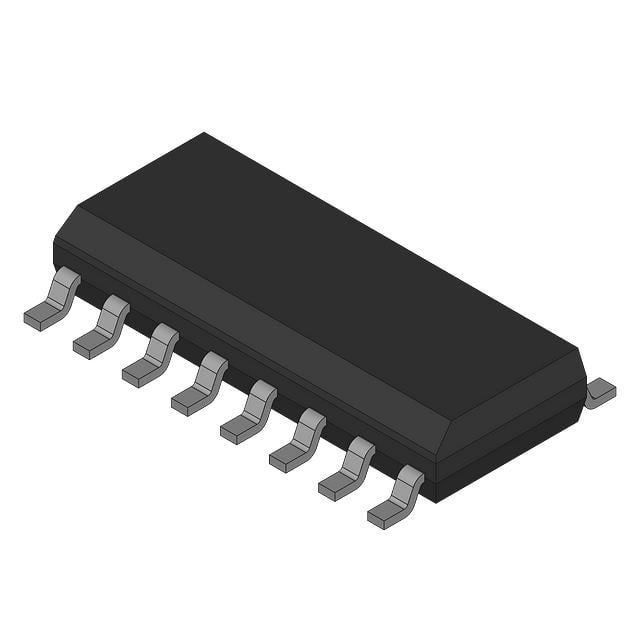
* Package Type: The 74HCT221 is available in a 14-pin Dual In-line Package (DIP) for through-hole mounting, as well as in a surface-mount package (SOIC-14).
* Dimensions (DIP-14): The typical dimensions for the DIP-14 package are 19.4 mm x 6.35 mm x 3.81 mm, which ensures compatibility with most PCB designs.
* Pinout Configuration: The pins are arranged in a standard 14-pin layout with clear markings for each function, making it easy to integrate into designs.
* Mounting Type: The device supports both through-hole and surface-mount assembly, offering flexibility for different manufacturing processes.
Applications
The 74HCT221 is versatile and can be used in various applications requiring precise pulse generation or time delay. Some common applications include:
* Timing Circuits: Used in time delay applications where a precise delay is needed before an action is taken, such as in automotive or industrial control systems.
* Pulse Generation: Used in applications requiring regular pulse output for triggering other systems, like in clock generation or PWM (Pulse Width Modulation) signal creation.
* Signal Shaping: It can be used to clean up noisy or irregular signals by generating defined output pulses.
* Debouncing Switches: It is also useful for debouncing mechanical switches, as the multivibrator ensures that only clean transitions are registered.
* Frequency Division: By using external components, the 74HCT221 can be used as a frequency divider in communication or signal processing systems.
* Edge Detection: It can detect specific transitions in digital signals, making it useful in edge detection applications.
Reliability and Safety Features
* Wide Voltage Range: Operating within a range of 4.5V to 5.5V, the 74HCT221 can be used in various digital circuits, ensuring broad compatibility across systems.
* Temperature Range: The device operates in a standard industrial temperature range of -40°C to +85°C, making it suitable for a wide range of environmental conditions.
* ESD Protection: The device includes internal electrostatic discharge (ESD) protection, ensuring safe operation in environments prone to ESD hazards.
Summary
The NXP Semiconductors 74HCT221DB,112 is a dual monostable multivibrator designed to generate precise time delays and pulse signals for use in digital systems. With its HCT technology, it provides high-speed performance with low power consumption, ideal for timing and control applications. The device’s flexible timing characteristics, ease of integration into digital circuits, and compatibility with standard logic systems make it an excellent choice for various embedded system designs.